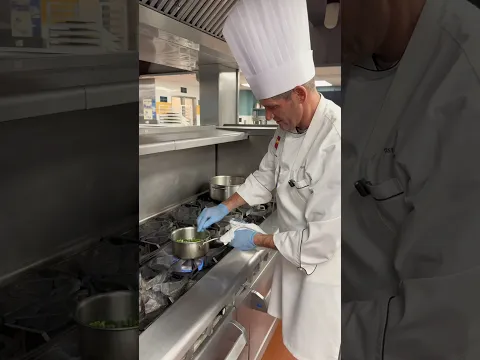
The LA Times Food Bowl was a great success! 🍴✨#ICECulinary #LAFoodBowl #CulinaryArt #CulinarySchool
20 November 2026 · 0:39 watch
Advertisement
What the LA Times Food Bowl is, how the festival has changed since 2017, and what its format, charity focus and 101 Best Restaurants reveal means for chefs planning to attend or take part in a major Southern California food festival.
Key takeaways
- The LA Times Food Bowl began in 2017 and combines restaurant tastings with drinks, demonstrations and talks.
- Recent editions have been organised around distinct sessions, such as a Saturday night flavour event and a 101 Best Restaurants reveal.
- The 2026 festival moved to the Barker Hangar in Santa Monica, with booths split between outdoor and indoor spaces.
- The festival has tied its programme to charitable giving, working with food banks and food-recovery partners since its early years.
- Lielle took the number one position on the 101 Best Restaurants list for contemporary Californian and European cooking with Nordic-influenced techniques.
The LA Times Food Bowl is a food festival presented by the Los Angeles Times that celebrates Southern California's restaurant scene through unlimited tastings, drinks, demonstrations and talks. It began in 2017 and has moved venues over its run. For chefs, the useful question is less about the event as a spectacle and more about how a festival of this kind is structured, who takes part, and what it offers a restaurant or culinary student in terms of visibility and industry contact.
How the festival is structured
The format has changed over the years, but the core idea has stayed the same: guests move between restaurant booths sampling food and drink, with programming layered on top. Recent editions have run over two distinct nights. The 2026 festival was presented with a Saturday night "Flavor" session offering unlimited bites and sips from more than 30 top restaurants, along with chef demos, cookbook signings and craft beverage producers. A separate 101 event was built around the reveal of the 101 Best Restaurants in L.A., a list curated by the Times' restaurant critics.
Earlier editions were different in character. In 2024 the festival ran over three days at the Paramount Pictures Studios backlot, with tastings from over 40 restaurants per session, winery, brewery and distillery pours, cooking demonstrations, DJ sets and a livestream of the on-site stage. The sessions were ticketed and limited, which shaped how the crowd moved through the space.
Venue and layout
The 2026 event moved to the Barker Hangar in Santa Monica. Reviewers who had attended events at the venue before noted that the layout was manageable despite the scale. Most restaurant booths sat outdoors, with food vendors also indoors, and tables were spread through the space to keep crowds moving. For a food festival, that kind of spacing matters: long queues at booths and congested seating are the usual failure points, and a clear floor plan reduces both.
Charity and sustainability commitments
The festival has a stated charitable purpose. Its third edition, in 2019, aimed to raise funds to fight food insecurity and hunger, and to promote waste reduction and sustainability through charity partners and participating events. Named partners at that time included the L.A. Regional Food Bank, Food Forward and Midnight Mission. The programme guide also grouped events into categories such as Giveback, Kids in the Kitchen, Classes, Markets and Tours, and Test Kitchen, which gave chefs and sponsors clear slots to position their work.
Who appears and why it matters to the trade
The lineup has drawn from both established and rising figures. Earlier editions featured a broad group of Los Angeles chefs, including owners of Bavel, n/naka, Providence, Spago, Sqirl and Trois Mec, while later editions have included restaurant owners, cookbook authors and celebrity guests. The 2026 event also paid tribute to the late Jonathan Gold, the Pulitzer-winning critic, and presented the Gold Award to Langer's Delicatessen-Restaurant. Lielle, an upscale restaurant serving contemporary Californian and European cooking with Nordic and Scandinavian-inspired techniques, took the number one spot on the 101 list. It was not providing samples at the event, which shows that a list placement and a festival booth are separate commitments.
For a professional kitchen, the practical takeaways are about planning. A festival booth needs a portable, quick-service menu that can hold quality under volume; a list placement is a reputational rather than a logistical achievement; and charitable partnerships are part of how the event positions itself with sponsors and the public.
References
Original video by Institute of Culinary Education. The Chef's Circle is the article publisher, not the video creator. This overview is written independently by The Chef's Circle editorial desk — watch the original on YouTube.
Keep reading