 18:23
18:23Munchies
Sauna, Shots & Karaoke in Helsinki: Chef’s Night Out
Explore Helsinki's vibrant hospitality scene with Chef Dani Hänninen as he showcases hyper-local foraging, sauna culture, and late-night industry community.
Cuisine
Nordic cooking that leans on preservation — cure, pickle, ferment, smoke — and lets clean, cold-climate produce carry the plate.
Nordic cooking that leans on preservation — cure, pickle, ferment, smoke — and lets clean, cold-climate produce carry the plate.
18:23Explore Helsinki's vibrant hospitality scene with Chef Dani Hänninen as he showcases hyper-local foraging, sauna culture, and late-night industry community.
 5:41
5:41Discover how Italian Chef Andrea Selvaggini of 1 Michelin star Savage in Oslo balances pristine hand-dived scallops with cold-smoked reindeer heart.
 9:34
9:34Discover how Executive Chef Andrea Selvaggini of 1 Michelin star Savage in Oslo transforms the humble cabbage into a technical tour de force, featuring precise gyoza folding and a delicate, modernist cabbage coral.
 15:16
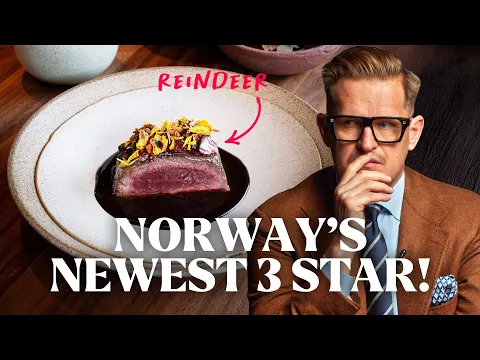
15:16Go inside Re-Naa, Norway's newest three-Michelin-starred restaurant, where Chef Sven Erik Renaa places an open kitchen at the heart of an intimate, hyper-local dining experience.
 16:17
16:17Go inside the culinary choreography of Copenhagen's Alchemist, where Chef Rasmus Munk serves a mind-bending 50-course tasting menu over six hours.
 15:29
15:29Discover how Chef Eric Vildgaard overcame a turbulent past to earn three Michelin stars at Restaurant Jordnær, establishing a new benchmark for Nordic fine dining and collaborative hospitality.
 16:25
16:25Discover the art of curing salmon with this professional guide to making gravlax, based on Brad Leone's class on osmotic preservation.
 14:23
14:23An editorial analysis of Noma's revolutionary culinary model and operational philosophy as the iconic Copenhagen restaurant prepares to close its doors.
 10:33
10:33Explore the culinary philosophy and service design of Stockholm's iconic three-Michelin-starred Restaurant Frantzén, where Nordic terroir meets Japanese precision.
 3:16
3:16Discover how to transform tough, resinous forest forage into tender, toffee-like delicacies. This guide breaks down the three-Michelin-star technique of candying baby Scotch pine cones, popularized by René Redzepi.
 84:45
84:45An editorial analysis of the MICHELIN Guide Ceremony Nordic Countries 2026, exploring industry benchmarks, sustainable culinary trends, and career strategy for professional chefs.
Shorts & reels
Sixty-second clips — one idea, one trick, no preamble.
Questions from the pass
For traditional Nordic gravadlax, use a 1:1 ratio of coarse sea salt to caster sugar. For a 1kg side of salmon, apply 100g of the mix, seasoned with crushed white peppercorns and plenty of fresh dill. Cure in the fridge at 4°C under a light weight for 36 to 48 hours, turning twice.
The standard Nordic quick-pickle base is the 1-2-3 method. This ratio uses one part 12% spirit vinegar (ättika), two parts sugar, and three parts water by volume. Dissolve the sugar in warm water and vinegar with mustard seeds and dill. Cool completely before pouring over sliced cucumber or red onion; store at 4°C.
Cold-smoking in the Nordic style requires keeping the smokehouse temperature strictly below 25°C, ideally between 15°C and 20°C, to prevent the proteins in fish like salmon or trout from cooking. Smoke over beechwood or alder sawdust for 12 to 24 hours after a dry salt cure to achieve a delicate, clean flavour profile.
Weigh fresh bilberries or lingonberries, then mix with exactly 2% of their weight in non-iodised sea salt. Vacuum-pack the mixture and leave it at a stable room temperature of 20°C to 22°C for five to seven days. The bag will swell as lactic acid bacteria produce carbon dioxide. Refrigerate once the desired acidity is reached.
Skyr is a fat-free, high-protein Icelandic cultured dairy product. Because of its low fat content, it splits when boiled. To use it in hot sauces, whisk it into the pan off the heat at the very end of cooking, keeping the temperature below 60°C, or stabilise it first by mixing in a little cornflour.
The library is just the prep work
A free account on The Chef's Circle app gets you a professional portfolio, a way in with chefs and kitchens across our 1.6 million-strong following, and a cut of the ad revenue on the content you make.