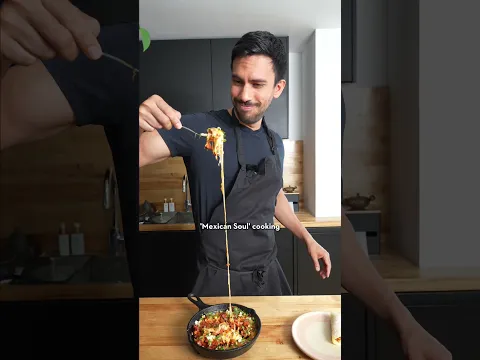
J'ai écrit un livre de cuisine sans recettes...
20 November 2026 · 0:33 watch
Advertisement
Cuisiner sans recettes is a French-language cookbook by agronome Véronique Bouchard that replaces fixed recipes with principles and techniques for cooking from seasonal, local and organic produce. Here is what the book sets out to teach and how its approach differs from a conventional cookbook.
Key takeaways
- Cuisiner sans recettes, by Véronique Bouchard, was published in 2020 by Éditions Écosociété and is positioned as an anti-cookbook built on principles rather than fixed recipes.
- The book's framework rests on seasonality, local sourcing and organic production as the starting point for cooking decisions.
- The author links recipe-led cooking to wider pressures, including climate change, social inequality, resource depletion and pandemic risk.
- The approach aims to develop culinary reflexes so that a cook can adapt to available ingredients rather than follow a set formula.
- The book is structured around two theoretical sections that precede practical technique.
What the book sets out to do
Cuisiner sans recettes (Cooking Without Recipes) is a French-language book by Véronique Bouchard, a farmer, agronome and founder of the Ferme aux petits oignons, a solidarity cooperative she has been involved with for more than twenty years. Published in 2020 by Éditions Écosociété under the subtitle Guide de résilience alimentaire (a guide to food resilience), it is deliberately an anti-cookbook. Rather than giving the reader a set of dishes to reproduce, it aims to build the habits and judgement that let a cook work from what is available.
The book's starting point is the claim that a fixed recipe is a kind of ready-made thinking, and that it sits poorly with a food system shaped by climate change, growing social inequality, depleted resources and the risk of pandemics. The author argues that cooks need to rethink how food is produced, consumed and prepared, and that this means adapting to greater seasonality and to what is actually on hand. The aim is to release the culinary creator in each reader, and to loosen the dependence on prescribed ingredient lists.
How the book is structured
The book opens with a theoretical section that sets out the principles behind the approach. Its purpose is to move the recipe away from ready-to-think and ready-to-eat models, and to rediscover the value of seasonality, local sourcing and organic production. A second theoretical section follows, and the published description positions the two together as the foundation for practical technique. The emphasis is on conceptual groundwork before any kitchen method is introduced.
This ordering matters for a professional reader. The book treats sourcing and seasonSeasonTo add salt, acidity, herbs, spices or other flavouring to balance and enhance a dish. as the first decisions in a dish, not as an afterthought to a shopping list. For a kitchen that buys by the week or by supplier availability, the framework maps closely onto menu planning: you start from what the market is offering and then decide how to cook it.
Cooking without a fixed formula
Traditional cookbooks encode decisions in advance: quantities, timings and sequences that assume a stable supply. Bouchard's approach reverses that. The emphasis falls on reflexes, the small habits that let a cook judge when a vegetable is ready, how to combine ingredients that are in seasonSeasonTo add salt, acidity, herbs, spices or other flavouring to balance and enhance a dish. and how to adjust when something is missing. The book is presented as a way to develop those reflexes so the cook is less dependent on the page.
The main practical gain is flexibility. A cook who understands the principles can substitute, rebalance and adapt without rewriting a recipe each time an ingredient is unavailable or out of seasonSeasonTo add salt, acidity, herbs, spices or other flavouring to balance and enhance a dish.. That is a useful discipline in a professional setting where menus change with supply, and where waste is a constant concern.
Who the book suits, and what it is not
The book is not a collection of recipes to follow line by line, and readers expecting a conventional repertoire will find it works differently. It is best read as a companion to professional or home cooking that already has technical grounding, because its value lies in the reasoning rather than in step-by-step instruction. A second source, a bookseller's review of an image-free cookbook, is unrelated to this title and should not be taken as describing it.
For chefs and cooks interested in seasonal sourcing, food resilience and the logic of improvisation, the book offers a clear and deliberately non-dogmatic framework. Its strength is in encouraging cooks to ask why a dish is built a certain way, and what they can change when the ingredients change.
References
Questions from the pass
Frequently asked questions
What is Cuisiner sans recettes about?
It is a French-language book by agronome Véronique Bouchard, published in 2020 by Éditions Écosociété with the subtitle Guide de résilience alimentaire. It presents itself as an anti-cookbook that offers principles and techniques for building cooking reflexes and greater food autonomy, rather than a set of fixed recipes to follow.
How does the book approach seasonality?
The book treats seasonality, local sourcing and organic production as the first considerations in a dish. Its opening theoretical section is devoted to these principles, and the author argues that adapting to greater seasonal availability is central to cooking well in an era of climate change and resource pressure.
Who is the author?
Véronique Bouchard is a farmer, agronome, speaker and eco-feminist citizen who founded the Ferme aux petits oignons, a solidarity cooperative, and has been involved in it for more than twenty years. She is also a mother, and the book draws on her work in her community.
Original video by Tom Cooks. The Chef's Circle is the article publisher, not the video creator. This overview is written independently by The Chef's Circle editorial desk — watch the original on YouTube.
Keep reading