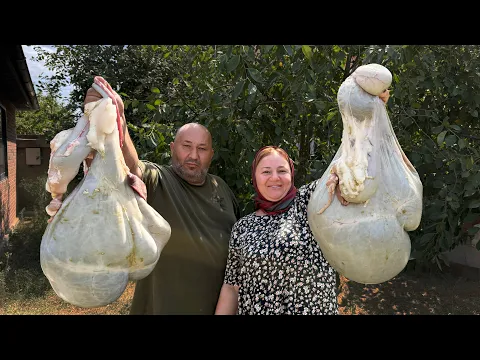
They just gave me free lamb meat at the market. Making samsa from the stomach
10 September 2026 · 3:00 watch
Advertisement
Discover how to utilise lamb tripe in traditional Central Asian baking. This guide covers the critical steps of cleaning lamb stomach, preparing a succulent minced filling with onions, and laminating pastry for a perfect, flaky samsa.
Key takeaways
- Meticulous cleaning and prep of the lamb stomach is essential to neutralise strong offal aromas before dicing.
- A high ratio of finely diced onions is required in the filling to provide the steam and moisture needed to tenderise the tripe.
- Gluten relaxation and proper lamination with fat are key to achieving the classic flaky, multi-layered samsa pastry.
- Securely fold and seal the triangular pastries to prevent the natural juices from escaping during the bake.
Nose-to-Tail Pastry: Working with Lamb Tripe
For professional kitchens looking to minimise waste and introduce authentic rustic textures, nose-to-tail cooking offers excellent margin potential. In this demonstration, the focus is on utilising lamb stomach—often a discarded offal cut—as the primary protein for a traditional Central Asian samsa. The preparation requires meticulous cleaning of the tripe to remove any impurities and neutralise strong aromas, a critical stage before any cooking begins.
Once prepped, the stomach is finely minced. This technique is crucial; unlike tender muscle cuts, tripe requires fine dicing to ensure a pleasant mouthfeel once baked. The minced tripe is then combined with a high ratio of onions. In traditional Central Asian baking, onions are not just for flavour; they release moisture during baking, steam-cooking the filling inside the pastry casing and keeping the offal succulent.
Dough Preparation and Baking Mechanics
The pastry dough for samsa is a straightforward flour and water mix, rolled thin and laminated with fat to create flaky layers. To execute this successfully, the dough must be rested to relax the gluten, allowing it to be stretched thin without tearing. The pastry is rolled up tightly, sliced into portions, and rolled out again to form individual wrappers. This creates the characteristic concentric rings of flaky pastry upon baking.
When assembling, the filling is placed in the centre of the pastry disc, which is then folded into the classic triangular shape. Sealing the edges securely is vital to trap the steam and juices. The samsas are baked, traditionally in a tandoor oven, though a high-heat deck oven yields excellent results in a modern commercial kitchen. The heat must be sufficient to puff the laminated layers of pastry while cooking the raw tripe filling through.
Key Operational Pitfalls
The main risk when cooking with lamb tripe in baked goods is tough texture. Because tripe has high collagen content, it requires either par-boiling or very fine mincing combined with slow, moist heat inside the pastry. Ensure the dough is rolled to a consistent thickness; too thin, and the heavy, moist filling will break through; too thick, and the pastry will remain doughy at the folds. Maintaining a dry exterior on the pastry helps achieve a crisp, golden-brown finish.
Questions from the pass
Frequently asked questions
How do you properly clean lamb stomach for pastry fillings?
Thoroughly wash the lamb stomach in cold water, scrape away any residue, and blanch it if necessary. Rubbing the surface with salt or flour helps neutralise strong odours before mincing it for the filling.
What is the ideal fat-to-meat ratio for a traditional samsa filling?
Traditional Central Asian samsa relies heavily on rendered animal fat, often tail fat, mixed with the meat at around a one-to-three ratio to ensure succulence and richness within the pastry.
Why is onion so critical in a tripe samsa filling?
Onions provide the necessary moisture to steam-cook the tripe inside the sealed pastry. Without a high volume of onions, the tripe filling would dry out and become unpalatably tough.
Can these samsas be baked in a standard combi oven?
Yes, a standard combi or deck oven works well. Bake at a high temperature, around 200°C to 220°C, to quickly puff the laminated pastry layers while cooking the filling through.
How do you achieve the classic laminated layers in samsa pastry?
Roll the simple flour dough very thin, brush it generously with melted fat, roll it tightly into a log, and slice it crosswise before rolling out individual wrappers.
Main ingredients
Original video by BIG CHEF COOKING. This overview is written independently by The Chef's Circle editorial desk — watch the original on YouTube.
Keep reading
Related from the Community
 0:57
0:57Inside #BeefBash26
 9:00
9:00We Turned Fresh Catfish Into Patties!
 0:23
0:23Just two legends discussing dark meat vs. light meat 🍗
 17:27
17:27Juicy Mini Pies Recipe!
 19:27
19:27Authentic Uzbek Plov That ALWAYS Turns Out Perfect and Delicious!
 14:10
14:10