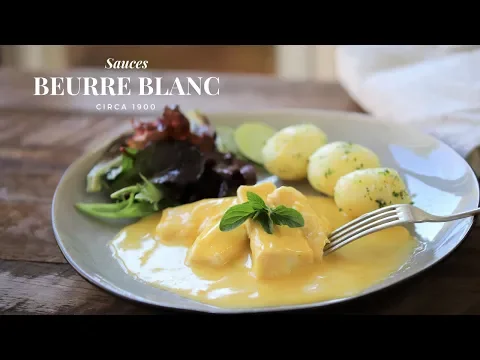
How to Make a Beurre Blanc (Butter Sauce) | Chef Jean-Pierre
20 November 2026 · 16:34 watch
Advertisement
How to make beurre blanc that stays glossy and stable: building the reduction, mounting cold butter over low heat, finishing and holding it for service.
Key takeaways
- Build a sharp reduction of wine, acid and shallot down to a couple of tablespoons before any butter goes in.
- Use cold, unsalted butter in even cubes; warm butter will not thicken the sauce.
- Keep the heat low and never let the sauce boil once the butter is in, or it will separate.
- Season with salt at the end and pass through a fine sieve for a smooth finish.
- Butter ratios and the use of cream vary between methods, so fix your own before service.
Beurre blancBeurre BlancA French butter emulsion made by reducing wine and vinegar with shallots before incorporating butter. is a warm emulsion of butter whisked into a sharp reduction of wine, vinegar or lemon juice with shallot. Get two things right — cold butter and gentle heat — and it turns glossy, pale and thick; let either slip and the fat separates into a greasy, thin sauce.
Building the reduction
The flavour comes from the base, not the butter. Shallots go into the pan with white wine and an acid, and the liquid is cooked down hard until only a couple of tablespoons remain. That concentrated, acidic syrup is what carries the butter and stops the sauce tasting flat, so the reduction and its acidity deserve as much attention as the emulsion itself.
Methods differ in the detail. Chef Jean-Pierre's published recipe sweats minced shallot in butter for three to four minutes, then reduces white wine and lemon juice for about ten minutes to two or three tablespoons, finishing with lemon zestZestThe coloured outer layer of citrus fruit containing aromatic oils.. Julia Child's version reduces wine and vinegar with shallot, salt and pepper to about 1 ½ tablespoons, and loosens an over-reduced base with a tablespoon of water. Choose one and follow it through rather than mixing the two.
How do you keep beurre blanc from splitting?
The emulsion depends on temperature. Use unsalted butter cut into even cubes and keep it in the fridge until the moment it goes in; warm butter will not thicken the sauce. Add it with a spoon rather than your fingers, which soften it too quickly.
Keep the pan on low heat and feed the butter in a piece at a time. Once the butter is in, the sauce must not boil or it will separate. Chef Jean-Pierre lets an over-hot pan cool before adding butter and gives 190°F (about 88°C) as his ceiling — a useful reference point to check with a probe thermometer rather than a universal rule.
Mounting, finishing and seasoning
Whisk constantly and let each piece melt before adding the next. The sauce changes from clear to a pale, milky yellow as it thickens, and the full addition takes around five minutes. SeasonSeasonTo add salt, acidity, herbs, spices or other flavouring to balance and enhance a dish. with salt at the end. Pass it through a fine sieveSieveTo pass a mixture through a mesh screen to remove lumps or create a smoother texture. if you want a completely smooth finish, and add a final squeeze of lemon off the heat before tasting.
Ratios, variations and service
Butter quantities are not settled: RecipeTin Eats uses 200 g for a small reduction, while Chef Jean-Pierre uses eight ounces across his shallot, wine and lemon base. Some cooks add cream to stabilise the sauce, a variation Child's recipe mentions without treating it as standard. Settle your own ratio and holding method in prep before the sauce goes on a menu.
On the pass, the sauce sits naturally with white fish, poultry and vegetables. Because boiling splits it, hold it somewhere warm and gentle rather than over direct heat. For a fish-led take on the same sauce, see this beurre blanc for fish.
References
Questions from the pass
Frequently asked questions
Why won't my beurre blanc thicken?
The butter is almost certainly too warm. The emulsion forms when cold butter melts gradually into a warm reduction, so keep the cubes in the fridge until the moment they go in, add them a piece at a time and whisk until each one has melted before adding the next. Handle the butter with a spoon rather than your fingers.
What temperature should the pan be when adding butter?
Low. The sauce must not boil once the butter is in, or it will separate. Chef Jean-Pierre lets an over-hot pan cool before adding butter and works to a ceiling of 190°F, about 88°C. Treat that figure as a reference point to check with a probe thermometer rather than a fixed rule.
Should beurre blanc be strained?
It is optional. Passing the finished sauce through a fine sieve gives a completely smooth texture. Leave it unstrained if you prefer, and add a final squeeze of lemon off the heat before tasting.
Main ingredients
Original video by Chef Jean-Pierre. The Chef's Circle is the article publisher, not the video creator. This overview is written independently by The Chef's Circle editorial desk — watch the original on YouTube.
Keep reading