All The Pans Chefs Use & How To Use Them
20 November 2026 · 19:27 watch
Advertisement
Which pan does a professional kitchen reach for, and why? This guide sets out how stainless steel, cast iron and carbon steel differ for searing, pan sauces and oven finishing, and where non-stick falls short.
Key takeaways
- Stainless steel handles sautéing, searing, braising, pan sauces and oven finishing, and tolerates high heat without non-stick's limits.
- Stainless holds less heat than cast iron, so it needs thorough preheating and should not be overcrowded when searing.
- Cast iron favours sustained heat and deep crust, carbon steel heats faster and weighs less, and stainless suits pan sauces with minimal upkeep.
- Non-stick coatings should not be used for high-heat searing and are best kept for delicate, lower-heat cooking.
- Deglazing after cooking lifts the fond, cleans the pan and builds flavour into a sauce.
Stainless steel is the workhorse of most professional kitchens, and for good reason: it sears well, handles high heat, moves easily from hob to oven, and can be deglazed to build a pan sauce without damaging the pan. Cast iron and carbon steel are the two main alternatives when a cook wants more heat retention or a different kind of crust. Non-stick has a narrower role than its popularity at home suggests. Choosing the right pan is less about brand and more about matching the material to the job.
Stainless steel: the all-round pan
A good stainless steel skillet can sauté, stir-fry, braiseBraiseTo brown food and then cook it slowly in a small quantity of liquid, usually covered., searSearTo expose food to high heat to develop a browned exterior. steaks, chicken thighs and salmon fillets, make omelettes, reduceReduceTo simmer a liquid so that water evaporates, concentrating flavour and increasing viscosity. pan sauces and cook caramel. It is compatible with induction hobs, is oven safe, and tolerates high heat without the caution that non-stick demands. Stainless is also nonreactive, so wine or acid can be used to deglazeDeglazeAdding liquid to a hot pan to dissolve browned cooking residue and form the base of a sauce. the fondFondThe browned residue left in a pan after searing or roasting. straight away without stripping anything from the surface. Most quality pans withstand oven temperatures of roughly 500 to 600°F (260 to 315°C), though handles become extremely hot and need protection.
The trade-off is heat storage. A stainless pan holds less heat than cast iron, so it needs proper preheating before food goes in, and it is wise to avoid overcrowding the surface when searing. Matching the pan to the burner also matters: a pan much smaller than the ring leaves hot spots, while an oversized pan on a low burner struggles to hold temperature across its base.
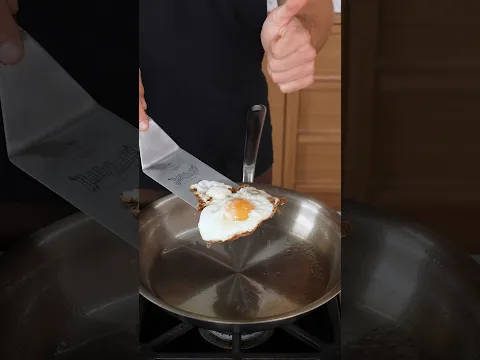
Food sticking is the most common complaint. Stainless releases proteins cleanly only once the surface is hot and the food has formed a crust. Moving the meat too early tears the surface away from the metal. Cooks should wait until the protein releases on its own before turning it.
Cast iron versus carbon steel for searing
Cast iron and carbon steel are often grouped together, but they behave differently and sources disagree on which suits steak best. One comparison names cast iron as the best pan for steak because it holds high heat for a deep, even crust. The same comparison notes that carbon steel heats faster and weighs less, while fully clad stainless steel sears well and makes better pan sauces. These are distinct priorities rather than one shared method: cast iron favours sustained heat and crust depth, carbon steel favours responsiveness and lighter handling, and stainless favours sauce work and low maintenance.
Maintenance differs too. Cast iron and carbon steel depend on seasoning, which needs upkeep, and acidic deglazing can strip it. Stainless needs no seasoning, does not rust in normal use and is often dishwasher safe in commercial-grade pieces. It is also considerably lighter than cast iron, which matters over a long service.
Where non-stick belongs
Non-stick coatings cannot safely reach the temperatures used for hard searing; one comparison puts the limit at 500°F (260°C) and warns against using it for that purpose. Its place is delicate work such as eggs and fish at lower heat, where the coating releases food easily and the cook wants minimal fat. Keep it for those tasks, and reserve stainless, cast iron or carbon steel for anything requiring a deep crust or a fondFondThe browned residue left in a pan after searing or roasting. to build a sauce from.
Choosing and caring for your kit
Build a kit around the work you do most. A single stainless skillet covers most tasks, a heavy cast iron or carbon steel pan adds a dedicated searSearTo expose food to high heat to develop a browned exterior. pan, and a small non-stick suits eggs. Preheat every pan thoroughly, match size to burner, and deglazeDeglazeAdding liquid to a hot pan to dissolve browned cooking residue and form the base of a sauce. promptly after cooking, which both cleans the pan and carries the caramelised residue into the sauce. Store pans so their surfaces are not scratched, and never let a pan with a seasoned surface sit wet.
References
Original video by Fallow Restaurant. The Chef's Circle is the article publisher, not the video creator. This overview is written independently by The Chef's Circle editorial desk — watch the original on YouTube.
Keep reading