How to Sharpen a Dull Knife
28 August 2026 · 22:34 watch
Advertisement
Master the essential techniques of honing and sharpening your chef's knives with guidance inspired by the metalworking traditions of Tsubame-Sanjō.
Key takeaways
- Understand the mechanical difference between honing (realigning the edge) and sharpening (removing metal to create a new bevel).
- Maintain a consistent angle, typically fifteen to twenty degrees, to ensure a uniform bevel along the entire length of the blade.
- Apply water continuously during whetstone sharpening to lubricate the blade and flush away metal slurry.
- Progress systematically from coarse grits for edge repair to fine grits for final polishing and refining.
Every professional kitchen runs on the sharpness of its blades. In this guide, inspired by travels to the legendary metalworking hub of Tsubame-Sanjō in Japan, J. Kenji López-Alt demystifies the essential maintenance routine that keeps chef's knives performing at their peak. A dull knife is not just inefficient; it is a safety hazard on the prep station, requiring excess force that leads to slips and fatigue. By understanding the mechanical difference between honing and sharpening, chefs can manage their steel with absolute precision.
Honing Versus Sharpening
Understanding when to hone and when to sharpen is fundamental to edge retention. Honing with a ceramic or steel rod does not remove metal from the blade; instead, it realigns the microscopic edge that bends during daily kitchen prep. This should be a regular habit before starting service. Sharpening, conversely, is an abrasive process that grinds away metal to establish a new bevel. Using whetstones requires steady hand-eye coordination to maintain a consistent angle—typically between 15 and 20 degrees depending on whether the knife is Japanese or Western. Holding this angle consistently across the stone is the single most important factor in achieving a razor-sharp edge.
Wet Stones and Maintenance Pitfalls
The primary pitfall in manual sharpening is inconsistency in angle and pressure. Rushing through the strokes often leads to a rounded edge, rendering the blade duller than when you started. Chefs must use controlled, deliberate passes along the whetstone, ensuring the entire length of the blade from heel to tip makes contact. Water must be applied constantly to flush away the slurrySlurryA mixture of starch and cold liquid used to thicken sauces, soups or gravies. of metal and stone particles, which otherwise impedes the sharpening process. Progressive polishing from coarse grits to fine finishing stones ensures a micro-serrated edge that slices cleanly through delicate ingredients like tomatoes and herbs without bruising.
Questions from the pass
Frequently asked questions
What is the difference between honing and sharpening a kitchen knife?
Honing realigns the existing microscopic teeth on the blade's edge without removing any metal, restoring its straightness. Sharpening uses an abrasive stone to actively grind away steel, creating a completely brand-new edge. Hone daily before service, but only sharpen when the blade becomes genuinely dull.
How do you maintain a consistent angle when sharpening on a whetstone?
Lock your wrist to keep the knife at a steady angle, typically fifteen to twenty degrees, as you slide it across the stone. Use your non-dominant hand to guide the blade with light pressure. Regular practice builds the muscle memory needed to keep this angle uniform from heel to tip.
Why is water necessary when using a whetstone?
Water acts as a lubricant to prevent friction heat from damaging the steel's temper. It also washes away the tiny metal filings and stone particles, known as slurry. This keeps the abrasive surface of the stone exposed and working efficiently during the sharpening process.
How often should a professional chef sharpen their knives?
A chef should sharpen their primary knives every few weeks or months, depending on usage volume and the hardness of the steel. In contrast, honing should be performed daily or even several times during a heavy shift to maintain alignment between sharpening sessions.
Original video by J. Kenji López-Alt. This overview is written independently by The Chef's Circle editorial desk — watch the original on YouTube.
Keep reading
Related from the Community
 1:16
1:16How a Sushi Master Makes Sushi
 0:38
0:38Stop Crying When Cutting Onions: Genius Kitchen Hack! #chefdez #cooking #cuttingonions #onions
 1:25
1:25Fine dining starts with the right tools 🔪#ICECulinary #FineDining #ChefTools #CulinarySchool #Chef
 1:39
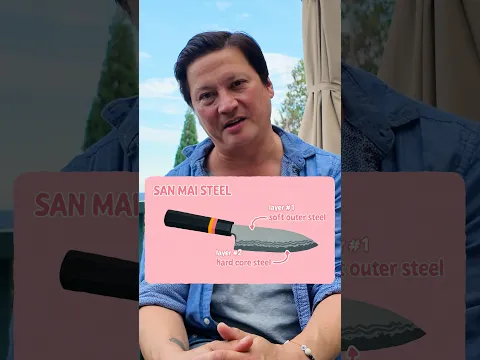
1:39San Mai Steel: Why It Works for Kitchen Knives
 3:01
3:01Here’s what really happens when you hone a knife
 0:50
0:50