Knife Making In Sanjō (With Aiba Steel) | Kenji Eats Japan
26 August 2026 · 23:07 watch
Advertisement
Go inside the factories of Tsubame-Sanjō with J. Kenji López-Alt to discover how Aiba Steel combines heritage Japanese metalworking with modern manufacturing precision to forge professional-grade kitchen knives.
Key takeaways
- Sanjō is a historic hub of Japanese metalworking, combining traditional forging methods with high-precision industrial manufacturing.
- Clad steel construction provides a hard cutting core protected by softer outer layers, balancing edge retention with overall blade durability.
- Proper blade geometry, from the spine taper to the bevel angle, prevents wedging and facilitates clean food release.
- High-quality manufacturing standards ensure consistent hardness and weight distribution, directly reducing chef hand fatigue on long shifts.
In this episode of his Japanese travel series, J. Kenji López-Alt takes professional cooks inside Aiba Steel, a renowned metalworking manufacturer in the Tsubame-Sanjō region of Niigata Prefecture. For any serious chef, the kitchen knife is the ultimate extension of the hand. Understanding how these tools are forged, ground, and finished is essential for selecting and maintaining the right blade for heavy-duty kitchen service.
The Heritage of Sanjō Metalworking
Tsubame-Sanjō has been the epicentre of Japanese blacksmithing and metalwork for centuries. At Aiba Steel, the focus is on merging heritage techniques with modern industrial precision. Unlike small-scale boutique workshops that produce only a handful of blades a week, this facility demonstrates how high-quality steel is processed at scale without sacrificing the structural integrity of the metal. For chefs, seeing the raw steel undergo heating, stamping, and precise grinding demystifies the metallurgy behind their daily tools. The video highlights how controlled industrial processes ensure consistency in hardness and bevel angle, reducing the microscopic structural flaws often found in purely amateur-forged blades.
Blade Geometry and Steel Tempering
The performance of a kitchen knife depends heavily on heat treatment and blade geometry. Aiba Steel’s manufacturing showcases how raw metal is transformed into high-performance clad steel, where a hard core steel is sandwiched between layers of softer, more durable stainless steel. This combination provides the edge retention of high-carbon steel with the corrosion resistance and flexibility of stainless steel.
For the working line chef, understanding this cladding is crucial. It dictates how you thin the blade during sharpening and how the edge behaves under high-impact prep work. The tour also sheds light on the grinding process, showing how the taper from spine to heel is carefully calibrated to ensure smooth food release and minimal wedging during intensive vegetable prep.
What This Means on the Pass
Investing in a knife from a dedicated maker like Aiba Steel or a collaborator like Vonhelmick Knife Co. isn't just about aesthetics; it is about ergonomics and balance. When a manufacturer pays meticulous attention to weight distribution and the radius of the spine and heel, it translates directly to reduced wrist fatigue during twelve-hour shifts. Watching the precision of Sanjō's knife makers reinforces why professional cutlery requires respect, correct whetstone maintenance, and an understanding of the specific steel alloy in your kit.
Questions from the pass
Frequently asked questions
Why is the Tsubame-Sanjō region significant for professional chef knives?
Tsubame-Sanjō is Japan's historic capital for metalworking and blacksmithing, dating back centuries. Manufacturers in this region, like Aiba Steel, are globally renowned for merging traditional hand-forging craftsmanship with state-of-the-art precision machinery to produce incredibly consistent, high-performance culinary blades.
What is clad steel, and why is it used in Japanese knives?
Clad steel consists of a very hard inner core steel wrapped in softer layers of stainless steel. This technique protects the brittle high-carbon core from rusting and cracking while ensuring the knife maintains an incredibly sharp edge for heavy kitchen prep.
How does blade geometry affect daily prep work on the line?
Blade geometry determines how a knife cuts and releases food. A taper from the spine to the cutting edge prevents wedging in dense vegetables, while the balance and curve of the blade reduce friction and wrist strain during long prep shifts.
Why should a chef choose a factory-finished Sanjō blade over a purely hand-forged artisan knife?
Factory-finished blades from producers like Aiba Steel offer superior consistency in weight, heat treatment, and edge angle. This industrial precision eliminates the minor structural defects occasionally found in completely hand-forged knives, ensuring reliable performance on the pass.
Original video by J. Kenji López-Alt. This overview is written independently by The Chef's Circle editorial desk — watch the original on YouTube.
Keep reading
Related from the Community
 1:16
1:16How a Sushi Master Makes Sushi
 0:38
0:38Stop Crying When Cutting Onions: Genius Kitchen Hack! #chefdez #cooking #cuttingonions #onions
 1:25
1:25Fine dining starts with the right tools 🔪#ICECulinary #FineDining #ChefTools #CulinarySchool #Chef
 1:39
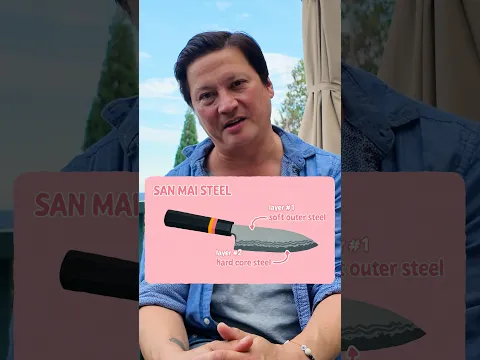
1:39San Mai Steel: Why It Works for Kitchen Knives
 3:01
3:01Here’s what really happens when you hone a knife
 0:50
0:50