I Froze Liver with Fat and Grilled It! Juicy CANDY on Fire
10 September 2026 · 0:31 watch
Advertisement
Discover a clever live-fire technique that transforms delicate liver and rich lamb fat into a perfectly portioned, self-basting grilled pinwheel.
Key takeaways
- Freezing the rolled liver and lamb fat firms up the proteins, allowing for clean, uniform slicing that holds together on the grill.
- The wrapping technique leverages melting lamb fat to self-baste the lean liver, preventing it from drying out over high heat.
- Active fire management is crucial to handle flare-ups caused by rendering fat dripping onto the coals.
- Grilling fresh flatbreads alongside the meat provides an ideal starch to absorb the rich, rendered juices.
Cooking liver over an open fire presents a classic kitchen challenge: keeping the lean, delicate offal moist while achieving a hard, smoky searSearTo expose food to high heat to develop a browned exterior.. In this outdoor demonstration, Big Chef Cooking showcases an ingenious charcuterie-style technique that solves this issue. By layering sliced liver with rich lamb fat, rolling them into a tight log, freezing the assembly, and then slicing it into neat pinwheels, you create a portion-controlled cut ready for direct-fire grilling.
The Mechanics of the Frozen Roll
The core of this technique lies in temperature control before the meat even touches the grate. Liver is notoriously soft and difficult to portion cleanly when raw. Wrapping it tightly with a layer of lamb fat and freezing the entire roll firms the proteins and fats. This allows for precise, uniform slicing that would be impossible at room temperature. When these frozen wheels are placed over the fire, the solid fat structure holds the delicate liver in place, preventing it from tearing or falling apart on the grillGrillTo cook using direct radiant heat..
As the roll cooks, the lamb fat melts directly into the liver, self-basting the offal from the inside out. This fat barrier insulates the lean liver, helping it retain its juices and preventing the dry, chalky texture that often ruins poorly prepared offal. It turns a temperamental ingredient into a forgiving, high-moisture cut.
Managing Fire and Fat on the Flame
Grilling high-fat meat rolls over an open flame requires active heat management. As the lamb fat renders, it drips directly onto the coals, creating flare-ups. Chefs must balance the intense heat needed for a deep crust with the risk of acrid charring. Moving the slices between direct and indirect heat zones is essential to renderRenderTo slowly heat fatty tissue so that its fat melts away. the fat fully without burning the exterior.
Serving this rich, deeply savoury preparation requires a simple, clean accompaniment to balance the palate. Searing fresh flatbreads directly on the fire alongside the meat provides the perfect vessel. The bread absorbs the escaping fat and juices, creating a cohesive, rustic plate that highlights the offal's rich profile. For chefs looking to introduce liver to a live-fire menu, this visual, high-impact prep method offers a reliable way to serve consistently juicy offal with excellent table-side appeal.
Questions from the pass
Frequently asked questions
Why do you freeze the liver and fat roll before slicing?
Freezing the roll firms up the soft textures of both the liver and the lamb fat, allowing you to slice them into neat, uniform pinwheels. Without freezing, the raw liver would tear and mush under the knife. This step ensures clean presentation and even cooking across all portions on the grill.
How does wrapping liver in lamb fat improve the final dish?
Wrapping the liver in lamb fat acts as a self-basting mechanism and insulating barrier during high-heat cooking. As the fat renders over the fire, it continuously lubricates the lean liver. This prevents the offal from becoming dry and chalky, keeping it remarkably juicy and rich.
How do you prevent flare-ups when grilling high-fat meat rolls?
You prevent flare-ups by maintaining distinct direct and indirect heat zones on your grill. Because the rendering lamb fat will inevitably drip and ignite, you must actively move the pinwheels away from direct flames to avoid bitter charring. Constant vigilance and quick spatula work are key to a clean sear.
Can you use other types of fat or offal for this freezing technique?
Yes, you can adapt this technique using pork caul fat, beef fat, or back fat paired with other delicate offal like kidney or heart. The underlying rule remains the same: choose a firm fat that holds its shape when cold and wraps easily around the lean, softer protein.
Main ingredients
Original video by BIG CHEF COOKING. This overview is written independently by The Chef's Circle editorial desk — watch the original on YouTube.
Keep reading
Related from the Community
 10:12
10:12I Tried to DETHRONE YouTube’s #1 Steak Video
 0:53
0:53HOT PLATE 🔥 Hausu - BBQ pork collar #bbq #chef #london #londonrestaurants #restaurant #pork#cheflife
 19:27
19:27Authentic Uzbek Plov That ALWAYS Turns Out Perfect and Delicious!
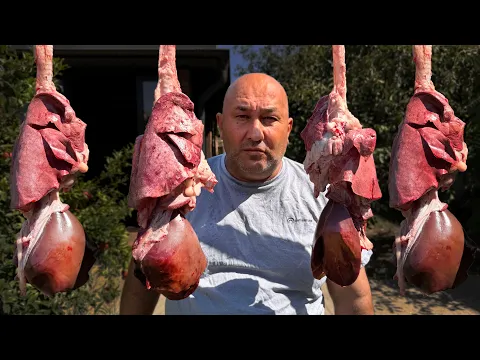 14:10
14:10Not Shashlik, But a BOMB! Juicy Liver Roll in Fat on the Grill
 1:07
1:07Is this the Ribeye of Salmon steaks?
 8:42
8:42