The Chef Behind NYC's No. 1 Restaurant Breaks Down His Three Defining Dishes — Dishing With Dan
22 September 2026 · 18:12 watch
Advertisement
Discover how Chef Paul Carmichael applies rigorous technique, precise butchery, and slow-cooking methods to classic Caribbean dishes at NYC's acclaimed Kabawa.
Key takeaways
- Precise lamination and temperature control are critical to achieving the signature flaky texture of Caribbean patty dough.
- Cooking chuletas can can requires careful butchery to balance the cooking times of the lean loin, fatty belly, and skin.
- Low and slow braising is essential for breaking down collagen in tough gamey meats like goat while retaining moisture.
- Seasoning and spicing must be deeply layered to stand up to long cook times without losing brightness.
Translating Caribbean Heritage for the Professional Kitchen
Chef Paul Carmichael’s menu at Kabawa challenges standard perceptions of Caribbean food, reframing regional classics through meticulous preparation and focused technique. For professional chefs, his approach offers a masterclass in how to respect deep-rooted culinary traditions while adapting them to a high-volume, premium service. Rather than presenting a generalised view of Caribbean cuisine, Carmichael highlights specific regional elements—ranging from Jamaican-style beef patties to Puerto Rican chuletas can can—demonstrating that the region's food is as diverse as it is complex.
Precision Dough and Slow-Braised Fillings
The first cornerstone of the menu is the beef patty, a street-food staple re-engineered for precision dining. Achieving the perfect flaky pastry requires strict temperature control to prevent the fat from melting prematurely during laminationLaminationFolding butter through dough to create alternating layers, as used for croissants and puff pastry., which would ruin the distinct layers. The filling must strike a balance: highly seasoned, moist, yet thick enough not to split the pastry when baked. Carmichael showcases how slow-cooked beef, rich with spice and traditional seasoning, must be carefully drained of excess fat while retaining its deep, aromatic moisture.
Whole-Muscle Butchery and Texture Control
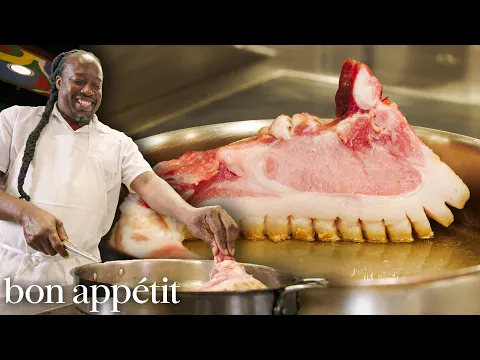
With the chuletas can can, Carmichael tackles a complex cut of pork that includes the loin, rib, and belly, complete with the skin. The primary technical hurdle here is heat management: cooking the lean loin to a juicy finish while rendering the belly fat and puffing the skin into a crisp, crackling finish. This requires precise butchery to ensure even thickness across different muscle groups, followed by strategic temperature adjustments during cooking to prevent the loin from drying out before the skin is fully crisped.
The final dish, the goat, illustrates the value of patience in the prep kitchen. Cooking goat requires a deep understanding of collagen breakdown. Carmichael emphasises low-temperature braising to soften tough, lean cuts without drying them out. The key takeaway for chefs is that moisture retention in gamey meats relies heavily on maintaining a gentle, consistent simmer, coupled with a heavily spiced braising liquid that penetrates the meat without overpowering its natural character.
Questions from the pass
Frequently asked questions
How do you prevent the pastry of a Caribbean patty from turning soggy?
Keeping the filling cold and well-drained before assembly prevents steam from making the pastry soggy. Ensure the braised beef filling is chilled to solidify any fats, and bake the patties in a preheated hot oven to set the laminated dough layers quickly.
What is the main challenge when preparing chuletas can can?
The main challenge is managing the vastly different cooking rates of the loin, belly, and skin. You must butcher the cut precisely to ensure even heat distribution, then use a two-stage cooking process to keep the loin juicy while rendering the belly and crisping the skin.
Why is slow braising necessary for cooking goat?
Slow braising is necessary because goat is a highly active, lean muscle meat with abundant collagen. Cooking it at a low, gentle simmer over several hours breaks down the tough connective tissues into gelatin, yielding a tender, succulent texture without drying out the meat.
How do you achieve a flaky texture in patty dough?
A flaky texture requires maintaining cold ingredient temperatures during lamination to prevent the fat from melting into the flour. This ensures distinct layers of dough and fat remain intact, which puff up and separate when the moisture vaporises during baking.
Original video by Eater. This overview is written independently by The Chef's Circle editorial desk — watch the original on YouTube.
Keep reading
Related from the Community
 8:09
8:09How America’s Best Pork Chop is Made at NYC's #1 Restaurant | Made to Order | Bon Appétit
 9:00
9:00We Turned Fresh Catfish Into Patties!
 2:56
2:56Mika's Empanadas de Carne
 16:56
16:56I Tried a Restaurant Built for Someone Who’ll NEVER Eat There!
 0:23
0:23Just two legends discussing dark meat vs. light meat 🍗
 17:27
17:27