How To Make Every Sushi | Method Mastery | Epicurious
15 August 2026 · 22:31 watch
Advertisement
Discover the art of sushi-making with Takahiro Sakaeda, executive chef of Nami Nori. This masterclass covers everything from perfect shari preparation to advanced rolling and slicing techniques.
Key takeaways
- Perfecting the shari (sushi rice) is the foundational skill upon which all sushi styles depend.
- Proper pressure is key; whether hand-pressing nigiri or packing hakozushi, the rice must hold together without becoming dense.
- Understanding nori moisture management prevents soggy rolls and ensures a crisp bite during service.
- Sashimi requires precise, single-stroke knife cuts to preserve the delicate texture and presentation of the fish.
In this masterclass from Epicurious, Takahiro Sakaeda, executive chef and co-owner of Nami NoriNoriThin sheets of dried edible seaweed commonly used in Japanese cuisine., demystifies the craft of sushi. For professional chefs looking to integrate authentic sushi elements into their menus or refine their brigade’s technique, Sakaeda’s step-by-step breakdown serves as a masterclass in precision, temperature control, and ingredient respect.
Mastering the Shari (Sushi Rice)
The foundation of all superior sushi is the shari (seasoned rice). Chef Sakaeda highlights that sushi is defined not by raw fish, but by the rice itself. Chefs will learn the critical nature of washing the grains thoroughly to remove excess starch, ensuring a clean, non-gummy texture. Once cooked, the hot rice must be seasoned with a precise ratio of sushi vinegar. The technique involves gently folding the vinegar into the rice using a cutting motion with a paddle (shamoji). This distributes the seasoning evenly while simultaneously cooling the rice to body temperature, giving it a characteristic glossy sheen without crushing the delicate grains.
Form and Structure Across Styles
Sakaeda demonstrates a wide array of classical and contemporary styles, proving that sushi construction is an exercise in structural engineering. From the elegant, hand-pressed nigiri—where the rice must be packed firmly enough to hold its shape but loosely enough to melt in the mouth—to the compressed layers of hakozushi (boxed sushi), each style requires a different manipulation of pressure.
For rolled variations, chefs are introduced to the nuances of hosomaki (thin rolls), futomaki (thick, multi-ingredient rolls), and uramaki (inside-out rolls). Sakaeda details the placement of ingredients and the precise use of the bamboo rolling mat (makisu). He emphasizes that noriNoriThin sheets of dried edible seaweed commonly used in Japanese cuisine. reacts instantly to moisture; thus, speed and dry hands are paramount during assembly to prevent the seaweed from turning chewy before service.
Precision Knife Work and Presentation
The masterclass culminates in a study of knife skills, particularly in the preparation of sashimiSashimiJapanese preparation of precisely cut raw fish or seafood served without cooking. and the delicate filling of ikura gunkan maki (battleship rolls). Slicing fish for nigiri and sashimiSashimiJapanese preparation of precisely cut raw fish or seafood served without cooking. demands a razor-sharp yanagiba (sushi knife) and a single, fluid drawing motion from heel to tip. Sawing at the flesh destroys the delicate cellular structure of the fish, negatively impacting both mouthfeel and visual presentation. Ultimately, Sakaeda teaches chefs that master-level sushi relies on the synergy of temperature, texture, and clean, confident knife work.
Questions from the pass
Frequently asked questions
What is the most critical element when preparing sushi rice?
The most critical element is the balance of seasoning and temperature during the cooling process. Shari must be seasoned with sushi vinegar while hot so it absorbs the liquid, then cooled quickly using a fan to achieve a glossy finish without breaking the grains.
How does hakozushi differ from traditional rolled sushi?
Hakozushi, or boxed sushi, relies on a wooden mould rather than a bamboo mat to shape the rice and toppings. The ingredients are layered inside the press, compressed gently to form a cohesive block, and then sliced into uniform, bite-sized rectangles.
What technique prevents nori from becoming chewy in rolled sushi?
To prevent nori from becoming chewy, you must work quickly to assemble and serve the rolls immediately after the rice touches the seaweed. Exposure to the moisture in the rice will quickly soften the nori, ruining its characteristic crisp texture.
Why is a single-stroke cut essential when slicing sashimi?
A single-stroke cut is essential because sawing back and forth tears the delicate muscle fibres of the fish. Drawing the blade smoothly from heel to tip preserves the structural integrity of the flesh, resulting in a cleaner mouthfeel and superior presentation.
How do you construct a balanced gunkan maki?
Constructing gunkan maki requires wrapping a strip of nori around a small hand-pressed ball of rice, leaving a high collar at the top. This hollow space is then filled with soft or loose ingredients, such as salmon roe, ensuring the filling stays secure.
Main ingredients
Original video by Epicurious. This overview is written independently by The Chef's Circle editorial desk — watch the original on YouTube.
Keep reading
Related from the Community
 1:16
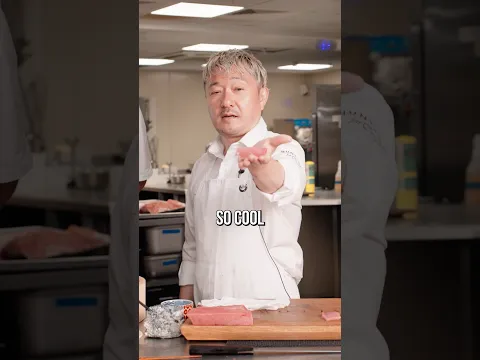
1:16How a Sushi Master Makes Sushi
 0:38
0:38Stop Crying When Cutting Onions: Genius Kitchen Hack! #chefdez #cooking #cuttingonions #onions
 1:25
1:25Fine dining starts with the right tools 🔪#ICECulinary #FineDining #ChefTools #CulinarySchool #Chef
 1:39
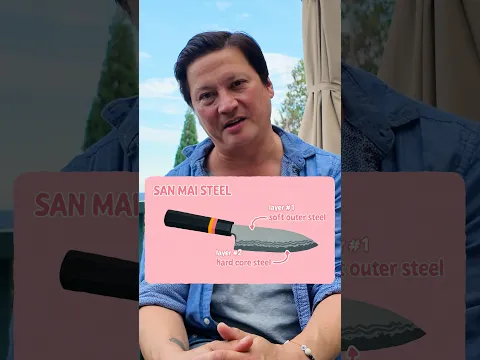
1:39San Mai Steel: Why It Works for Kitchen Knives
 3:01
3:01Here’s what really happens when you hone a knife
 0:50
0:50