How Michelin Chefs Cook Steak (From Blue to Well Done)
15 August 2026 · 10:40 watch
Advertisement
Master the science of professional steak cookery with Fallow's guide to the Heston Blumenthal multi-flip method, achieving perfect doneness from blue to well done.
Key takeaways
- Adopt the Heston Blumenthal frequent-flip method, turning every 15-30 seconds, to cook the beef evenly and eliminate the dry grey band.
- Rely strictly on precise core temperatures, ranging from 38°C for blue to 70°C+ for well done, measured with an instant-read probe.
- Account for carry-over cooking by removing the steak from the heat source just prior to reaching the target core temperature.
- Ensure a mandatory resting period to let muscle fibres relax and reabsorb critical juices before slicing.
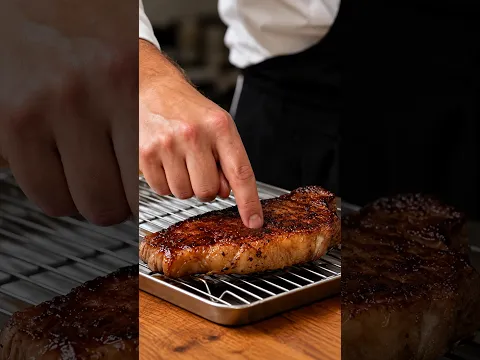
In the professional kitchen, consistency is the hallmark of a great section cook. In this culinary masterclass from London's Fallow restaurant, the team demystifies steak cookery by demonstrating a Michelin-level technique rooted in Heston Blumenthal’s pioneering multi-flip method. For chefs looking to refine their grillGrillTo cook using direct radiant heat. or pan work, this approach offers a scientific, highly repeatable alternative to traditional steak-cooking methods.\n\n## The Science of the Frequent Flip\n\nThe core technique showcased by the Fallow team relies on turning the steak frequently—often every 15 to 30 seconds—rather than the old-school rule of flipping only once. This constant rotation prevents heat from building up too intensely on either surface, effectively cooking the meat from both sides simultaneously while minimising the grey band of overcooked meat just beneath the crust. It allows for a beautifully caramelised exterior crust through the Maillard reactionMaillard ReactionThe chemical reaction between amino acids and reducing sugars responsible for complex browning flavours. while maintaining a perfectly uniform, juicy interior. This method is particularly effective for thick-cut steaks where heat penetration needs to be carefully managed to avoid drying out the outer layers before the core reaches its target temperature.\n\n## Mastering Doneness via Thermal Precision\n\nRather than relying on tactile hand tests, which can be highly subjective and unreliable across different cuts of beef, the Fallow technique relies strictly on core temperature monitoring. The guide provides precise internal temperature metrics for every level of doneness: Blue at 38°C, Rare at 44-48°C, Medium Rare at 48°C, Medium at 50-52°C, Medium Well at 56°C, and Well Done at 70°C or higher. Understanding these tight windows is crucial for high-volume service. Chefs must also account for carry-over cooking, pulling the steak just before it hits these exact numbers to allow the residual heat to finish the process during the restingRestingAllowing cooked meat or another food to stand before serving so heat and juices can redistribute. phase. Resting is non-negotiable, allowing the muscle fibres to relax and reabsorb juices, ensuring a clean slice on the pass without loss of moisture.\n\n## Pan Management and Fat Rendering\n\nAchieving a Michelin-standard finish also requires meticulous pan management. Chefs must ensure the cooking surface is sufficiently hot to trigger caramelisationCaramelisationThe thermal breakdown of sugars that creates browned colour and complex sweet, toasted flavours. instantly, yet controlled enough that any fat or butter used for basting does not burn. This balance ensures the exterior of the steak develops a rich, complex flavour profile without bitterness, while the interior remains succulent and cooked precisely to the guest's specification.
Questions from the pass
Frequently asked questions
Why does the Fallow method recommend flipping the steak frequently?
Flipping the steak frequently, typically every 15 to 30 seconds, distributes heat more evenly throughout the meat. This technique prevents excessive heat buildup on any single side, which drastically minimises the dry grey band beneath the crust and results in a more uniform cook from edge to edge.
What is the target core temperature for a perfect medium-rare steak?
For a medium-rare steak, the target core temperature is 48°C (118°F). It is vital to remove the beef from the heat slightly before this point to allow carry-over cooking to bring the steak up to its final temperature during the resting phase.
How does a chef prevent the steak from drying out when cooking to well done?
To cook a steak to well done (70°C+ or 158°F+) without drying it out, you must manage the pan temperature carefully. Using the frequent-flip method allows the heat to penetrate gently and evenly to the core, avoiding intense surface heat that would scorch the exterior.
Why is resting the steak considered non-negotiable?
Resting allows the tensed muscle fibres of the cooked steak to relax and reabsorb the hot, liquefied juices within the meat. Slicing the steak too quickly causes these juices to immediately run out onto the board, leaving the beef dry, tough, and lacking flavour.
Main ingredients
Original video by Fallow Restaurant. This overview is written independently by The Chef's Circle editorial desk — watch the original on YouTube.
Keep reading
Related from the Community
 0:41
0:41The making of OSIP #restaurant #chef #cheflife #finedining #somerset #cooking #recipe #shorts #food
 47:23
47:23Steve | The Vivaldi Way is live!
 47:23
47:23Jamie Oliver's Chicken Recipes & Ideas To Try This Weekend
 0:27
0:27How To Fry The Perfect Steak #howto #shorts
 0:59
0:59Is Resting a Steak Worth It?
 19:16
19:16