The Best Picanha Recipe (In Description)
27 August 2026 · 0:18 watch
Advertisement
Learn the professional techniques for portioning, skewering, and open-fire grilling picanha, paired with a warm chimichurri butter.
Key takeaways
- Slice the picanha edge-to-edge rather than top-to-tail to form the signature C-shape on the skewers.
- Season heavily with coarse salt to compensate for the salt lost as the fat cap renders during cooking.
- Utilise a three-zone indirect grilling setup at 350°F to manage high-fat flare-ups and ensure even cooking.
- Rotate the skewers every 2 to 3 minutes to guarantee even heat penetration and prevent burning.
Preparing picanha (rump cap) over open fire requires a solid understanding of fat rendering, skewering technique, and heat management. In this video, Derek Wolf demonstrates how to handle this prized Brazilian cut using a traditional skewer setup over a three-zone coal bed. The tutorial focuses on achieving a medium-rare finish with an evenly rendered fat cap, paired with a warm, melted chimichurri butter.
Skewering and Portioning Technique
The preparation begins with portioning the whole picanha. Rather than slicing top-to-tail, the beef is sliced from edge to edge into thick steaks. This orientation allows the steaks to be bent into the classic "C" shape, with the thick fat cap facing outwards. When skewered through the centre, this shape ensures the fat layer is exposed to the heat uniformly. Before hit with fire, the meat is oiled and heavily salted with coarse sea salt. A generous hand with the salt is essential here; as the fat renders over the coals, it will wash away some of the seasoning, so over-salting initially is necessary to maintain a balanced crust.
Managing the Three-Zone Fire
The cooking phase relies on an indirect grilling setup at approximately 350°F (175°C). By utilizing a three-zone method—placing two coal beds on either side with an indirect zone in the middle—the chef creates an ideal environment for gentle, even cooking. The skewers are suspended directly between the two coal beds. Rotating the meat every two to three minutes is crucial. This frequent rotation prevents localized flare-ups from dripping fat and ensures the heat penetrates the beef evenly. If flare-ups do occur, they can be controlled with a light dousing of water or by placing a foil pan with water beneath the meat to catch the oil. The steaks are cooked for about 15 minutes until they register an internal temperature of 120°F (49°C) for medium-rare, followed by an eight-minute rest to allow the juices to redistribute.
Emulsifying the Chimichurri Butter
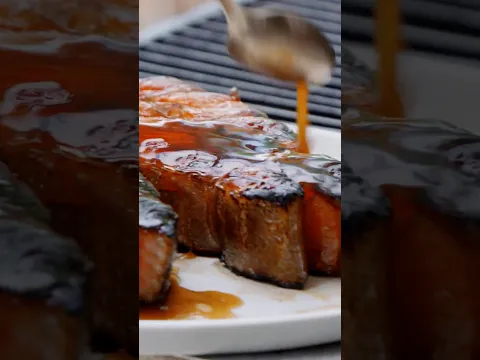
Instead of a standard cold chimichurri, this recipe utilises a warm chimichurri butter. Melted unsalted butter is combined with freshly chopped parsley, minced garlic, red wine vinegar, dried oregano, and red pepper flakes. This warm sauce is poured over the rested picanha just before slicing. The acidity of the red wine vinegar cuts through the rich fat of both the beef and the butter, while the fresh herbs and garlic bring sharpness to balance the heavy char of the wood-fired crust.
Questions from the pass
Frequently asked questions
Why must picanha be sliced from edge to edge instead of top to tail?
Slicing edge to edge allows you to bend each steak into a clean C-shape with the fat cap running along the outer curve. This shape ensures that when the meat is skewered, the fat layer is evenly exposed to the heat, leading to consistent rendering and uniform cooking across all portions.
Why is it necessary to apply an extra generous amount of coarse salt?
A heavy layer of coarse sea salt is required because a significant amount of the seasoning will wash off as the fat renders and drips onto the coals. Over-seasoning beforehand ensures that enough salt remains bonded to the meat to form a flavorful, savoury crust once cooking is complete.
What is the benefit of using a three-zone fire setup for skewered beef?
A three-zone setup provides indirect heat by placing coal beds on both sides of the skewers while leaving the middle clear. This configuration prevents the rendering beef fat from dripping directly onto hot coals, which reduces flare-ups and allows the meat to roast evenly at 350°F (175°C).
How do you manage flare-ups if the rendering fat ignites?
If the rendering fat causes flare-ups, you can douse the fire with a small amount of water to control the flames. Alternatively, place a foil pan containing a quarter-inch of water directly underneath the skewers to catch the dripping oil safely before it hits the coals.
What is the target internal temperature and resting time for medium-rare picanha?
You should pull the picanha off the grill when it reaches an internal temperature of 120°F (49°C). Allow the meat to rest for eight minutes before slicing, which lets the muscle fibres relax and helps redistribute the hot juices throughout the steak.
Main ingredients
Original video by Over The Fire Cooking by Derek Wolf. This overview is written independently by The Chef's Circle editorial desk — watch the original on YouTube.
Keep reading
Related from the Community
 10:12
10:12I Tried to DETHRONE YouTube’s #1 Steak Video
 0:22
0:22Celebrating Culture and Community
 0:53
0:53HOT PLATE 🔥 Hausu - BBQ pork collar #bbq #chef #london #londonrestaurants #restaurant #pork#cheflife
 19:27
19:27Authentic Uzbek Plov That ALWAYS Turns Out Perfect and Delicious!
 14:10
14:10Not Shashlik, But a BOMB! Juicy Liver Roll in Fat on the Grill
 1:07
1:07