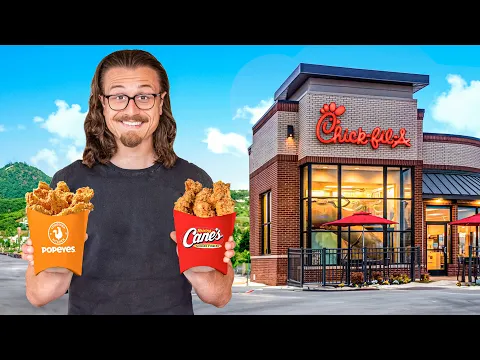
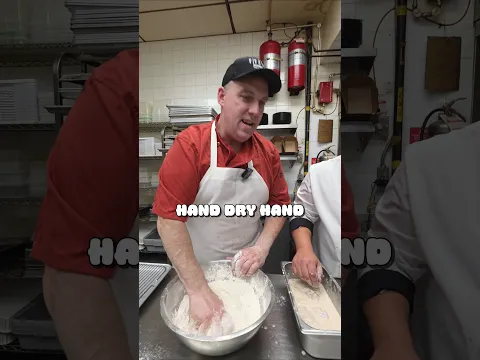
Chicken Tenders 🤤
20 November 2026 · 2:18 watch
Advertisement
Chicken tenders are cut from the chicken breast's tenderloin and coated in breading, then fried or baked. Here is how the dish is built, where homemade versions differ from fast-food and frozen ones, and where the coating tends to fail.
Key takeaways
- Tenderloin strips or breast cut into strips of about three-quarters of an inch need no trimming, which makes them a fast starting point for breaded chicken.
- Egg is the binder that holds seasoned crumbs to the chicken, and the chicken should be patted dry before breading.
- Deep frying, oven baking with an oil spray, and air frying produce different crusts and should be treated as separate methods.
- Panko gives a coarser, crunchier crust than regular dry breadcrumbs, which is useful when the coating needs to stay crisp.
- Mass-produced American tenders are typically flash-fried to set the breading and then frozen, which explains why many restaurant and frozen versions are textured differently from homemade ones.
Chicken tenders are strips of chicken, usually taken from the breast's tenderloin, that are coated in a seasoned breading and cooked until crisp. In the United States they became a mass-produced fast-food staple in the mid-to-late 1980s, when they were promoted as an alternative to chicken nuggets because they retained more whole meat. Homemade versions follow the same logic: a cut of chicken that needs no trimming, a binder that holds crumbs in place, and a crust that stays crunchy after cooking.
Why the cut and the binder matter
Tenderloins come ready to use, so the cook avoids the cutting step entirely. Where tenderloins are unavailable, boneless, skinless chicken breast cut into strips of roughly three-quarters of an inch thick serves the same purpose, and that thickness is the one given in one published recipe. The strips should be patted dry and seasoned with salt before breading, since a damp surface prevents the coating from adhering.
The binder is typically whole egg, sometimes loosened with a little water, or beaten with mustard and minced garlic in another method. Egg is what makes the crumbs stick to the chicken. Flour is commonly the first dredgeDredgeTo coat food lightly in flour, breadcrumbs or another dry ingredient., giving the egg something to grip, followed by the crumb coating. Seasoned breadcrumbs or panko can carry most of the flavour, so the chicken itself needs only salt.
Frying, baking and air frying: three distinct routes
Sources genuinely disagree on the cooking method, and the alternatives are different enough to plan separately. The classic route is deep frying. One published recipe calls for about two quarts of vegetable or peanut oil in a pot, with the tenders dredged in flour, spices and egg wash before going in. Deep frying gives the most even, blistered crust and is the method behind most American fast-food tenders, which are typically flash-fried to set the breading and then frozen for shipment.
The oven route is different. One recipe bakes the breaded strips at 400°F after preheating, with the tenders ready in under 20 minutes, and recommends spraying them with olive oil so the crumb crisps up. Panko is recommended over dry breadcrumbs for a coarser, crunchier finish. The oven method relies on surface fat and airflow, not immersion, so the crust will be drier and less uniformly golden than a fried version.
Air frying is a third approach that some home-cook sources treat as a lighter alternative to deep frying. It shares the principle of hot, moving air with the oven method, but the crust texture and timings will differ, and the evidence supplied here does not give air-fryer settings.
Mistakes and troubleshooting
The most common failure is a crust that slides off. This usually means wet chicken, a skipped flour dredgeDredgeTo coat food lightly in flour, breadcrumbs or another dry ingredient. or egg that has been applied too thinly. Crumbs that look pale after baking typically need a lighter spray of oil over the whole surface rather than a heavier coating in one spot. In deep frying, the breading must be fully set before the strips are removed, so the oil needs to be kept hot and the batch size controlled; overcrowding drops the oil temperature and produces a greasy coating.
Seasoning is a second pitfall. Because the coating carries the flavour, underseasoned crumbs taste bland even when the chicken is well seasoned. Some recipes use a generous blend of paprika, garlic powder, cayenne and black pepper in the flour, with a small amount of sugar to aid browning. Adjust the cayenne to suit the service.
Service and variations
Chicken tenders suit both family dining and quick service, and the classic accompaniments are ketchup, barbecue sauce, honey mustard, ranch and fry sauce. Homemade tenders are often presented as healthier than the restaurant or frozen versions, but the nutritional profile depends on the breading and the cooking fat. One recipe reports around 25 grams of protein per serving, which is useful when positioning them on a children's or light-lunch menu.
Variations are mainly in the breading. Panko gives a coarser, crunchier crust, while seasoned breadcrumbs or flour-based coatings give a finer finish. Regional and fast-food names vary too, with chicken fingers, fillets, goujons and strips all describing the same basic product.
References
Main ingredients
Original video by Steve | The Vivaldi Way. The Chef's Circle is the article publisher, not the video creator. This overview is written independently by The Chef's Circle editorial desk — watch the original on YouTube.
Keep reading