CHICKEN POTATO ROLLS | Crispy Chicken Snacks Recipe Cooking in Village | Fried Chicken Potato Snacks
20 November 2026 · 12:27 watch
Advertisement
A guide to crispy chicken potato rolls: how the potato and chicken mixture is typically bound, shaped and fried, and where the common pitfalls lie. The research available is thin, so this guide draws on related chicken roll and fried snack recipes rather than a single method.
Key takeaways
- A cooked, smooth potato mash bound with finely chopped chicken gives a filling that holds its shape for shaping and frying.
- The filling should be cooled enough to handle and be neither too wet nor too dry before rolling.
- Surface moisture and overcrowding the pan are the main causes of soggy, greasy fried rolls.
- Drain fried rolls on a rack rather than flat on paper to keep the coating crisp.
- Cut a test roll open to confirm the filling is hot through, as the chicken is already cooked before shaping.
Chicken potato rolls are a small, savoury fried snack built on a simple principle: a moist, seasoned filling of mashed potato and finely chopped chicken is shaped into compact rolls and fried until the exterior turns crisp and golden. The dish sits within a wider family of fried chicken and potato snacks, and the techniques that make it succeed are the same ones that govern cutlets, croquettes and filled rolls generally. Get the moisture of the filling right, keep the shapes compact, and the fry does the rest.
Building a filling that holds its shape
The filling is the foundation. Mashed potato provides the starch that binds the mixture, while finely chopped or minced chicken supplies savoury body and a firmer bite. Research on related chicken potato snacks points to a practical rule: the mash should be fully cooked and worked smooth before the chicken goes in, because lumps of undercooked potato will split the rolls in the fryer. Cool the mixture enough to handle comfortably before shaping, since warm potato is soft and sticks to the hands. SeasonSeasonTo add salt, acidity, herbs, spices or other flavouring to balance and enhance a dish. the filling thoroughly, as the coating and fry add little flavour of their own. Spices, herbs and aromaticsAromaticsIngredients such as onions, garlic, celery, herbs and spices used to build flavour in a dish. are where cooks typically differentiate their versions, and the choice is yours to make for the menu.
Shaping works best when the filling is consistent. Aim for rolls of uniform size so they cook evenly, and press the mixture firmly so there are no air pockets that can burst or leave the centre underdone. A light dusting of flour on the hands helps when the mixture is tacky.
Coating and frying for a crisp exterior
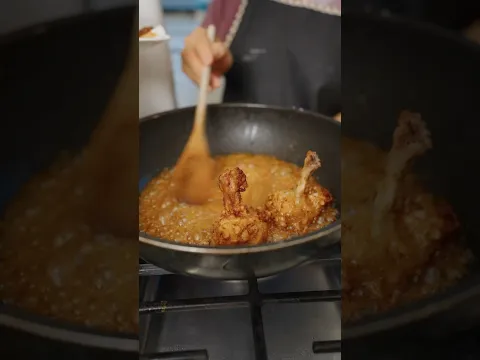
Crispness depends on two things: a dry surface before the fry and a fat hot enough to set the outside quickly. Related chicken roll recipes describe the classic sequence of coating and frying, and the principle holds across variations. Any surface moisture will steam the coating rather than crisp it, so pat the shaped rolls dry and avoid overcrowding the pan, which drops the oil temperature and produces greasy results.
Frying until the coating is golden and the filling is fully hot is the aim. Because the chicken is cooked before shaping, the fry is largely about colour and texture, but the centre still needs to reach a safe internal heat. Check a roll cut in half before serving to be sure the filling is piping hot through.
Common faults and how to avoid them
The most frequent problem is a filling that is too wet, which softens the shape and bursts in oil. Drain the potato thoroughly after cooking and allow the mixture to cool slightly. The second is a filling that is too dry or crumbly, which cracks when rolled; a small amount of additional mash usually corrects this. Oil that is not hot enough produces pale, oil-soaked rolls, while oil that is too hot browns the exterior before the filling warms through. Drain fried rolls on a rack rather than flat on paper, which traps steam against the underside.
Service and variations
Chicken potato rolls suit canapé, bar snack or light evening menus. They hold reasonably well after frying, which makes them practical for batch cooking before service, though they are best served while the coating is still crisp. A dipping sauce is the conventional accompaniment, and a sharp or cooling sauce cuts through the richness of the fried coating. Variations in the wider family of chicken rolls include different coatings and fillings, and cooks can adapt the seasoning to suit the cuisine or menu they are building. Keep the core structure intact, with a well-bound, moisture-controlled filling and a properly hot fry, and most variations will work.
References
Questions from the pass
Frequently asked questions
Why do chicken potato rolls split when they go into the fryer?
Splitting usually comes from a filling that is too wet, contains lumps of undercooked potato, or has air pockets from loose shaping. Mash the potato until smooth, drain it well, and press each roll firmly so the mixture is compact before it meets the hot oil.
How can I keep fried chicken potato rolls crisp before service?
Dry the shaped rolls before frying and avoid overcrowding the pan, which lowers the oil temperature. After frying, drain them on a rack rather than flat on paper so steam does not soften the underside of the coating.
How do I check that the filling is hot enough?
Cut one roll in half and check that the centre is piping hot throughout. The chicken is cooked before shaping, so the check is for even heat through the filling rather than for raw meat, and the test roll should be tasted once it has cooled slightly.
Main ingredients
Original video by Village Cooking Channel. The Chef's Circle is the article publisher, not the video creator. This overview is written independently by The Chef's Circle editorial desk — watch the original on YouTube.
Keep reading