Only Way to Make Prime Rib
19 September 2026 · 1:55 watch
Advertisement
Master the art of roasting bone-in prime rib with this professional guide from the Fallow kitchen, focusing on tempering, fat rendering, and the thermal mechanics of resting beef.
Key takeaways
- Always bring the rib of beef to room temperature before roasting to prevent a cold core and dry outer layers.
- Retain the bones during cooking as they insulate the ribeye muscle and promote an even internal temperature.
- Apply coarse salt generously beforehand to draw out surface moisture, securing a superior crust during the initial sear.
- Rest the joint for a minimum of half its cooking time to allow juices to redistribute and fibres to relax.
The prime rib, or rib of beef, is a benchmark of British butchery and Sunday service. In this masterclass from the Fallow kitchen, the focus is on maximising the potential of a well-aged bone-in fore rib. The approach eschews overly complex marinades, relying instead on fundamental butchery, precise temperature management, and clean seasoning to highlight the quality of the beef. Chefs will learn how to handle dry-aged fat, prepare the joint for even heat distribution, and execute a controlled roast that ensures edge-to-edge pink meat.
Butchery and Heat Preparation
Getting a prime rib ready for the oven starts long before the heat is turned on. A key step is ensuring the joint is brought to room temperature; cooking beef straight from the fridge guarantees an uneven cook, leaving the outer layers dry before the core reaches the desired temperature. The fat cap should be scored to aid rendering, which bastes the meat naturally during cooking. Leaving the bones intact is essential, as they act as a natural insulator, shielding the delicate ribeye muscle from direct, aggressive heat and imparting deep flavour to the surrounding meat. Seasoning must be aggressive and applied well in advance, allowing the salt to penetrate the muscle fibres and draw out moisture to create a dry surface perfect for browning.
Controlling the Cook and the Rest
The roasting process balances high-heat rendering with low-temperature cooking. Rather than blasting the joint throughout, a dual-temperature approach is preferred: searing at a high temperature to develop a deep, caramelised crust, followed by a gentle roast to bring the core up uniformly. This slow-roast method minimises the grey band of overcooked meat just beneath the surface. However, the most critical phase is the rest. RestingRestingAllowing cooked meat or another food to stand before serving so heat and juices can redistribute. the beef for at least half its cooking time allows the muscle fibres to relax and the juices to redistribute. Carving too early results in a dry service as the juices escape onto the board. By managing this thermal momentum, the beef continues to cook gently off the heat, resulting in a perfect medium-rare across the entire joint.
Questions from the pass
Frequently asked questions
Why should I leave the bones on the prime rib during roasting?
Leaving the bones on protects the meat from direct, intense heat by acting as a natural thermal buffer. This insulation ensures the meat closest to the bone cooks at the same rate as the centre, resulting in a more uniform medium-rare throughout while adding rich depth to the pan juices.
What is the benefit of bringing the beef to room temperature before cooking?
Tempering the meat ensures the core of the joint cooks at a similar rate to the exterior. If you roast a cold prime rib straight from the fridge, the outer layers will dry out and overcook long before the centre reaches its target temperature, leaving you with an uneven finish.
How long should a roasted prime rib rest before carving?
You should rest a prime rib of beef for at least half of its total cooking time in a warm place. This pause allows the contracted muscle fibres to relax and reabsorb the hot juices, ensuring the moisture remains within the meat rather than spilling out onto the carving board.
Should I sear the prime rib before or after roasting?
Searing the joint at the beginning of the process is highly effective for building a deeply caramelised crust. Starting with a high-heat blast renders the exterior fat and seals in flavour, after which you drop the oven temperature to gently bring the interior of the beef to your desired doneness.
Original video by Fallow Restaurant. This overview is written independently by The Chef's Circle editorial desk — watch the original on YouTube.
Keep reading
Related from the Community
 0:41
0:41The making of OSIP #restaurant #chef #cheflife #finedining #somerset #cooking #recipe #shorts #food
 47:23
47:23Steve | The Vivaldi Way is live!
 47:23
47:23Jamie Oliver's Chicken Recipes & Ideas To Try This Weekend
 0:27
0:27How To Fry The Perfect Steak #howto #shorts
 0:59
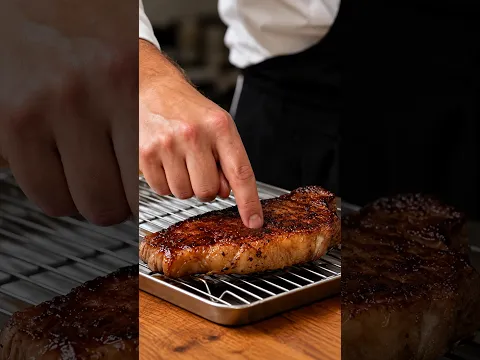
0:59Is Resting a Steak Worth It?
 19:16
19:16